


Kids and teen sport
Hydration For Kids & Teens
Weekend netball, Saturday cricket, school carnivals in February. Fluid and sodium leave the body faster than most kids will drink them back. Here is what the research actually reports, and the formats that work for small hands and short breaks.
General information only. For children, talk to your GP, pharmacist or child health nurse before adding a supplement.
10–16 yrs
Children in this age range showed a similar risk of hyperthermia and dehydration to adults exercising at up to 40°C.
Br J Sports Med, 2025 — 92 participants, 255 trials
0.3–0.75 L/h
ACSM fluid guidance for 9–12 year olds during exercise: 100–250 mL every 20 minutes.
ACSM, cited in BJSM 2025
1.12–2.09 L/h
Reported sweat rate range in hot conditions, against 0.71–1.77 L/h in cool conditions.
Nutrients, 2024 — personalised hydration review
What the research says
Kids are not automatically at higher risk — but heat still stacks up
A 2025 paediatric heat-stress study of 68 children and 24 adults across 255 trials found children aged 10–16 were at similar risk of hyperthermia and dehydration to adults during exercise at 30°C and 40°C. The practical takeaway is that youth sport in an Australian summer warrants the same fluid planning an adult would get.
Thermoregulation and dehydration in children and youth exercising in extreme heat compared with adults. Br J Sports Med, 2025.
Children's sweat is more dilute, but sodium still leaves
Reviews of paediatric thermoregulation note that sweat appears more dilute in children than adults, with greater sodium and chloride reabsorption at the sweat gland. Less sodium per litre does not mean none — it means concentration matters less than total volume across a long, hot day.
Exercise thermoregulation in prepubertal children: a brief methodological review. Front Physiol / PMC7556246.
Water alone can leave rehydration incomplete
Youth-sport guidance from the Gatorade Sports Science Institute argues that sodium intake should be matched to individual sweat sodium losses between sessions, because insufficient sodium can result in incomplete rehydration and is associated with exertional muscle cramping in young athletes.
Bergeron MF. Hydration and thermal strain in youth sports. GSSI Sports Science Exchange #158.
Fluid in vs fluid outReported hourly sweat losses against the intake guidance for each age band. Sweat rates vary widely between individuals and with intensity.
Sweat rate, cool conditions0.71–1.77 L/h
Range reported across team-sport athletes
Sweat rate, hot conditions1.12–2.09 L/h
37 ± 3°C environment
Intake guidance, 9–12 yrs0.3–0.75 L/h
100–250 mL every 20 minutes (ACSM)
Intake guidance, adolescents1.0–1.5 L/h
Assumes the athlete starts euhydrated (ACSM)
Sources: ACSM guidance as cited in BJSM 2025; sweat-rate ranges from Nutrients 2024.
Sweat sodium varies more than most people expectWhy a “one scoop fits all” answer does not hold up.
| Measure | Reported range | What it means |
|---|---|---|
| Sweat sodium | 11.2–86.5 mmol/L | A nearly eightfold spread across soccer, basketball and rugby players |
| Sweat rate (cool) | 0.71–1.77 L/h | Even in mild conditions, losses differ two to three times between kids |
| Sweat rate (hot) | 1.12–2.09 L/h | Heat raises the floor as well as the ceiling |
| Intake, 9–12 yrs | 100–250 mL / 20 min | Practical for a quarter-time or drinks break |
Ranges from Nutrients 2024 personalised hydration review; ACSM intake guidance.
What to watch for at the sidelineSigns a child may need a break, shade and fluid. None of these are diagnostic — if a child is unwell, stop the activity and seek medical advice.
Stopped sweating in the heat
A child who was sweating and then is not, in hot conditions.
Dark, small-volume urine
Less frequent trips and darker colour across a tournament day.
Headache or dizziness
Particularly on standing up after sitting on the bench.
Muscle cramping
Cramping in young athletes has been associated with heavy sodium losses.
Flushed skin, lethargy
Going quiet, dropping out of play, uncharacteristic irritability.
Not drinking unprompted
Kids often will not drink enough voluntarily. Scheduled sips beat thirst.
If a child is confused, vomiting or has a very high temperature, treat it as an emergency and call 000.
Picks for kids and teensStick sachets are easy to split across a bottle, and milder flavours get finished. Check every label for age suitability and ask your pharmacist or GP if unsure.
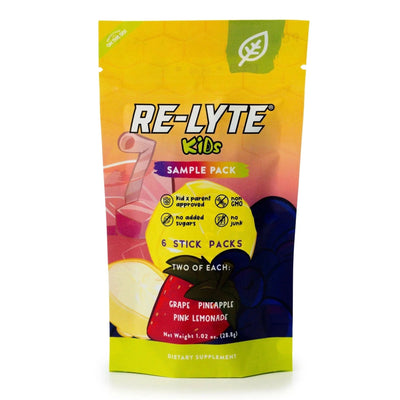
Re-Lyte Kids Hydration - Sample Pack - 6 Stick Packs
Redmond
$22.95
Individual sticks that are easy to carry in a sports bag and split across a bottle.
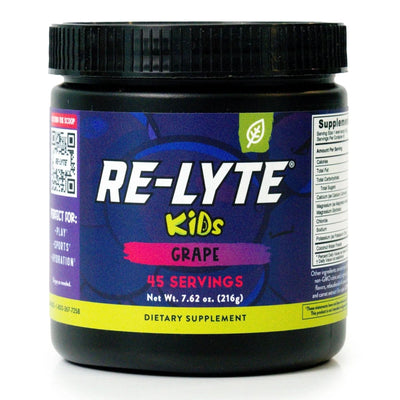
Re-Lyte Kids Hydration - Grape - Tub - 45 Serves
Redmond
$74.95
A big tub for a whole season of weekend games — a mild grape flavour kids tend to finish.
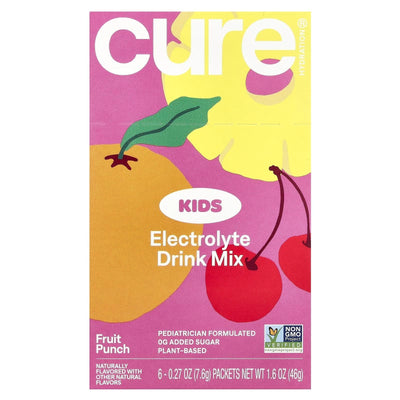
Kids Hydration - Fruit Punch Sample Pack - 6 Sticks
Cure
$29.95
A small sample pack to try before committing to a full tub.
Also stocked for kids and teens
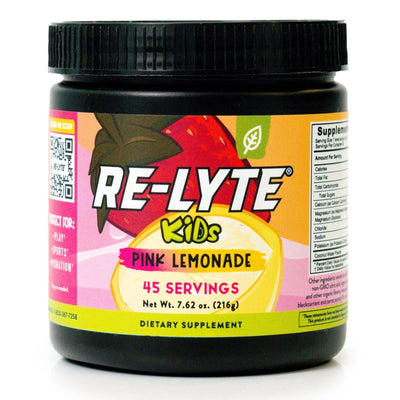
Re-Lyte Kids Hydration - Pink Lemonade - Tub - 45 Serves
Redmond
$74.95
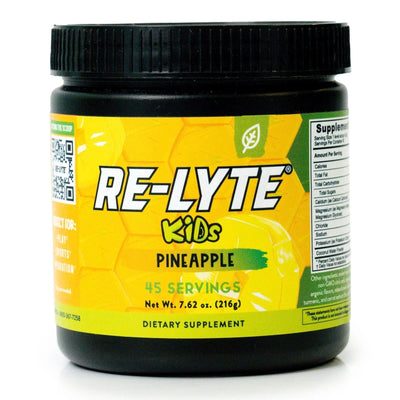
Re-Lyte Kids Hydration - Pineapple - Tub - 45 Serves
Redmond
$74.95
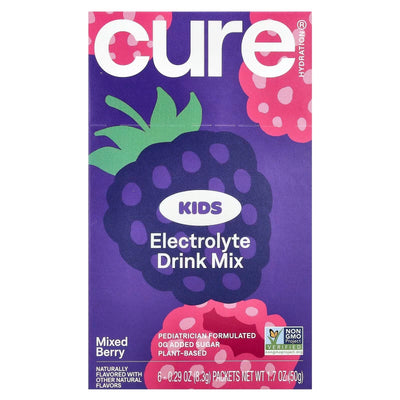
Kids Hydration - Mixed Berry Sample Pack - 6 Sticks
Cure
$29.95
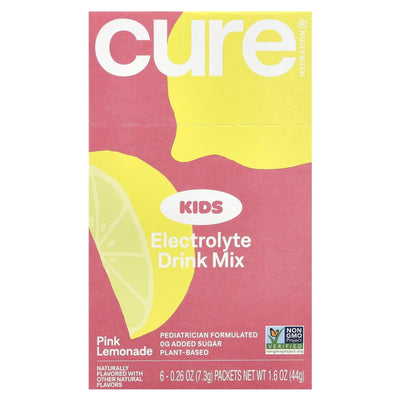
Kids Hydration - Pink Lemonade Sample Pack - 6 Sticks
Cure
$29.95
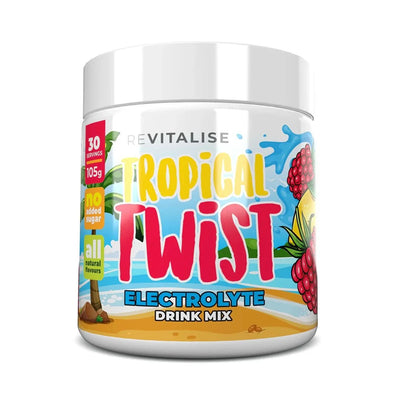
ReVitalise Kids Electrolyte Powder - Tropical Twist - 30 Serves
REVITALISE
$29.95
Compare the formatsSodium and sugar bands are relative across the range shown; always check the product label, which can change between batches.
| Product | Format | Serves | Sodium per serve | Sugar | Suits |
|---|---|---|---|---|---|
| Re-Lyte Kids Hydration — Grape | Tub, scoop | 45 | Moderate | Check label | A big tub for families going through a few games a weekend |
| ReVitalise Kids — Fruity Fiesta | Tub, scoop | 30 | Moderate | Check label | A flavour designed specifically for kids' sport |
| Kids Hydration Sample Pack (Cure) | Stick sachets | 6 | Moderate | Check label | Trying a flavour before buying a full tub |
| Re-Lyte Kids Sample Pack | Stick sachets | 6 | Moderate | Check label | Carrying in a kit bag, split across one bottle |
Sodium bands are indicative, not lab-tested figures for this page. Read the nutrition panel on the pack you buy, and check with your pharmacist or GP if your child has a medical condition.
Myth vs fact
MythKids handle heat better than adults because they are lighter.
FactA 2025 study of 92 participants found children aged 10–16 were at similar risk of hyperthermia and dehydration to adults during exercise up to 40°C.
MythThirst is a good enough guide for a child.
FactACSM guidance sets scheduled intake — 100–250 mL every 20 minutes for 9–12 year olds — rather than relying on thirst during exercise in the heat.
MythWater is always enough after sport.
FactYouth-sport reviews note that when sodium intake does not match sweat sodium losses, rehydration can remain incomplete.
Low sugar options
Filter by sugar-free electrolytes
Fast Australian dispatch
Often next business day from Wollongong
One trusted distributor
31 brands, one approved Australian distributor
Not sure which one?
Try a few brands before you commit to a full-size tub.
References
- Thermoregulation and dehydration in children and youth exercising in extreme heat compared with adults. British Journal of Sports Medicine, 2025.
- Exercise thermoregulation in prepubertal children: a brief methodological review. PMC7556246.
- Bergeron MF. Hydration and thermal strain in youth sports. GSSI Sports Science Exchange #158.
- Personalized hydration strategy to improve fluid balance and intermittent exercise performance in the heat. PMC11085813.
This page is general information about hydration and electrolyte products, not medical or dietary advice, and nothing here is intended to diagnose, treat, cure or prevent any condition. Supplements are not suitable for every child. Read the label, follow the directions for use, and speak with your GP, pharmacist or child health nurse before giving an electrolyte product to a child.
Shop kids-friendly picksFree shipping over $149
Shop now
Kids' hydration, answeredAnswers to what parents ask us most. These same answers power the FAQ schema on this page.
A 2025 study of 92 participants found children aged 10–16 were at similar risk of hyperthermia and dehydration to adults during exercise up to 40°C.
ACSM guidance sets scheduled intake — 100–250 mL every 20 minutes for 9–12 year olds — rather than relying on thirst during exercise in the heat.
Youth-sport reviews note that when sodium intake does not match sweat sodium losses, rehydration can remain incomplete.
Not sure which brand suits you?
Take our quiz and we will match you to a brand and format based on how you ride, or start with a taster pack and try a few before committing to a full size.